
U.S. authorities are warning of a new synthetic opioid from China that can be up to 50 times more potent than fentanyl.
Nitazenes pose an emerging threat because they are more resistant to naloxone, a medication that can reverse opioid overdoses. They are often mixed with other drugs and delivered in the form of counterfeit pills mimicking drugs such as Xanax or Percocet, according to authorities.
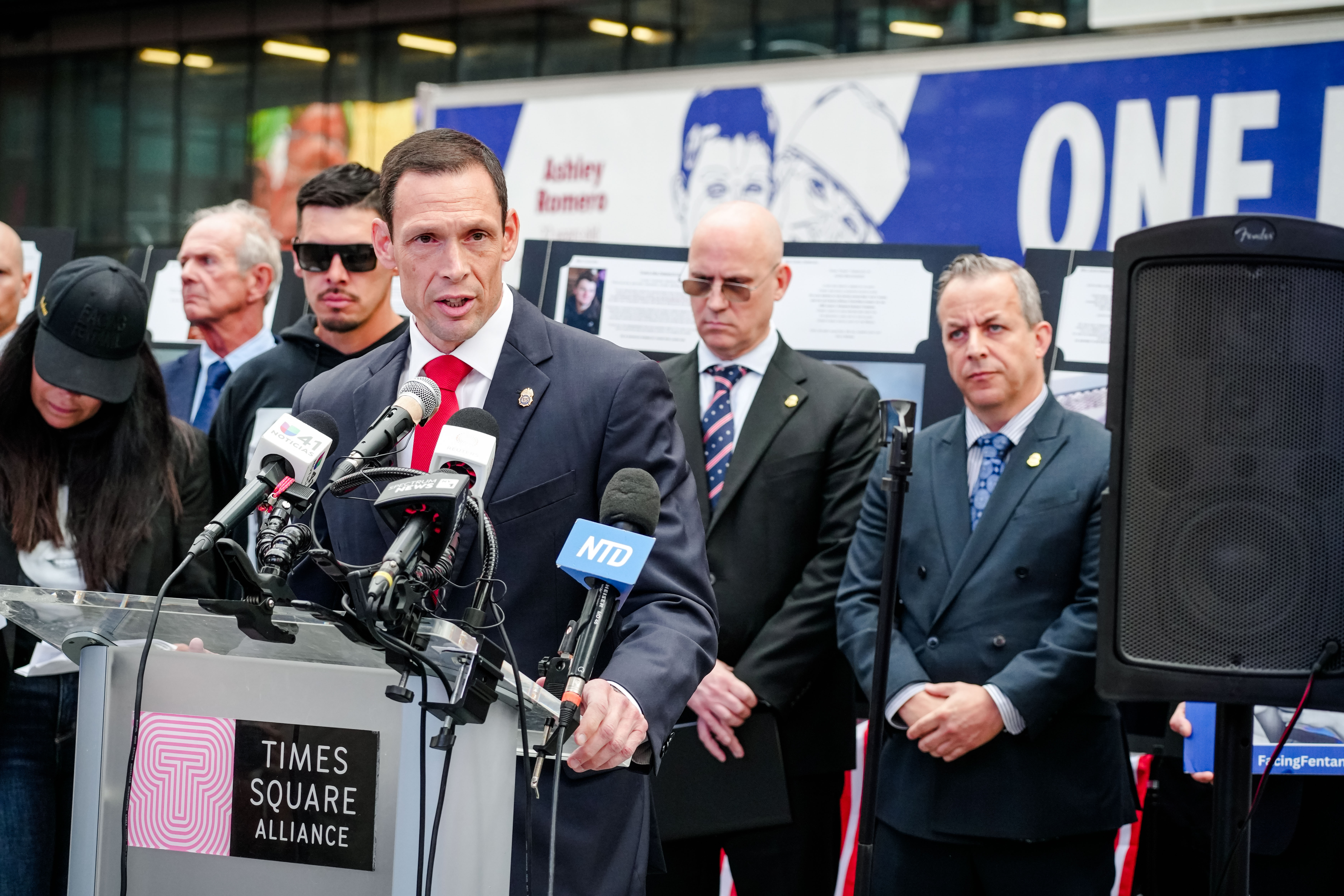
Frank Tarentino, who heads the New York Division of the Drug Enforcement Administration (DEA), said nitazenes coming from China have been increasingly prevalent on the illicit drug scene.
“Here in the United States, we have found it in heroin, methamphetamine, in some cases fentanyl, and more alarmingly, we have now seen it pressed into pills,” he said in a Sept. 10 interview with NTD, a sister outlet of The Epoch Times.
“What we have seen is that these cartels, these transnational criminal organizations that are operating on a global scale, are intentionally lacing their drugs with fentanyl and now nitazenes to increase the high, to increase the addiction, to make more money.”
Tarantino said traffickers are selling counterfeit prescription drugs such as oxycodone on the streets, online, or on social media. He warned that the only safe way to buy prescription drugs is through a legitimate pharmacy.
Chinese companies and Mexican cartels are turning to nitazenes, a cheap synthetic opioid, particularly as pressure mounts on fentanyl production and distribution.
Some cartels have shifted to nitazenes because of a recent crackdown on fentanyl precursor chemicals coming from China, according to Sally Sparks, a public information officer with the DEA’s Houston Division.
“We are also seeing street-level drug dealers mixing it with the fentanyl, heroin, and cocaine,” she told The Epoch Times via email.
President Donald Trump has made tackling the fentanyl crisis a signature issue of his administration, moving to impose tariffs on China and Mexico while declaring Mexican cartels terrorist organizations to fight the influx of the deadly drug.
Congress passed the HALT Fentanyl Act, which Trump signed into law in July. It permanently classifies fentanyl-related substances as Schedule 1 under the Controlled Substances Act, thus increasing penalties for possession and distribution.

President Donald Trump speaks before signing the HALT Fentanyl Act in the East Room of the White House on July 16, 2025. (Nathan Howard/Reuters)
Like fentanyl, nitazene has been tied to China.
In one instance, nitazenes were allegedly imported into the United States and Mexico by a China-based company and its employees, according to a 2023 U.S. Justice Department statement announcing eight indictments.
“Drug traffickers typically mix protonitazene and metonitazene with other opioids, such as fentanyl, to create new and more powerful cocktails of dangerous opioids,” the statement reads.
Depending on their production methods, these drugs can be up to 50 times stronger than fentanyl and heroin, according to the Inter-American Drug Abuse Control Commission.
Nitazenes were relatively unknown until recently, except to researchers studying opioids. They began showing up as pressure on fentanyl manufacturing and distribution intensified.
This class of drugs was developed in the 1950s and emerged in 2019 on the illicit drug market in Europe before spreading to the United States and beyond.
Dr. Stephen Loyd, director of the Office of Drug Control Policy in West Virginia—the epicenter of the national fentanyl crisis—described nitazenes as an emerging threat. Xylazine, an animal tranquilizer sometimes mixed with fentanyl, was viewed as a similar threat a few years ago, he said.
“The nitazenes are the kind of drug de jure to do that,” Loyd told The Epoch Times, noting that they are the “next step” for drug dealers.
Greater amounts of naloxone, which can reverse opioid overdose, have been needed to save people from nitazenes because of their potency, according to the Centers for Disease Control and Prevention (CDC).
Drug overdose deaths, mainly attributed to fentanyl, decreased by some 25 percent across the country from February 2024 to January 2025, according to provisional data from the CDC.
However, drug overdose remains the top cause of death for those between 18 and 44 years old, according to Dr. Allison Arwady, director of the CDC’s National Center for Injury Prevention and Control, who spoke at the National Conference of State Legislatures Summit in August.
Loyd noted that the recipes for some of these synthetic opioids, which are cheap to make, are available on the internet and that the only thing drug cartels need to produce them is a skilled chemist.
Most of West Virginia’s overdoses can be attributed to more than one drug, he said. Heroin, for example, likely has fentanyl or nitazenes, according to him.
“They blend this ... basically in bullet blenders that you get from Walmart,” Loyd said.
Nitazenes have been connected to more than 18,000 fatal and nonfatal emergency medical services encounters for overdose across the country from Jan. 1, 2023, to April 30, 2025, according to the National Drug Early Warning System.
States on the East Coast, such as Virginia, South Carolina, and Georgia, appear to be particularly hard-hit.
But recently, nitazenes have grabbed headlines in states such as Texas.
The DEA Houston Division has seen a spike in the number of fatal drug poisonings related to nitazene, more specifically N-pyrrolidino protonitazene (pyro) during the past 18 months, Sparks said.
Pyro is 25 percent more potent than fentanyl, according to her.
Agents have seized drugs laced with nitazenes in Houston, San Antonio, and Austin, Texas.
“We’re mainly seizing pills pressed to look like legitimate prescription drugs like hydrocodone and Percocet,” she said.
This year has seen 11 deaths associated with nitazene in the Houston area, Sparks said.
The victims’ ages have ranged from 17 to 59 years old. Also, in rural East Texas, a 16-year-old girl died of a drug overdose in July that authorities suspected was fentanyl but that turned out to be pyro.
Loyd said there will always be a new illicit drug on the horizon. Efforts to stop the cartels are needed, but treating people for addiction is the only real solution.
“You’ve got to treat people and decrease demand,“ he said. ”If you don’t do that, the supply will meet the demand 100 percent of the time.”