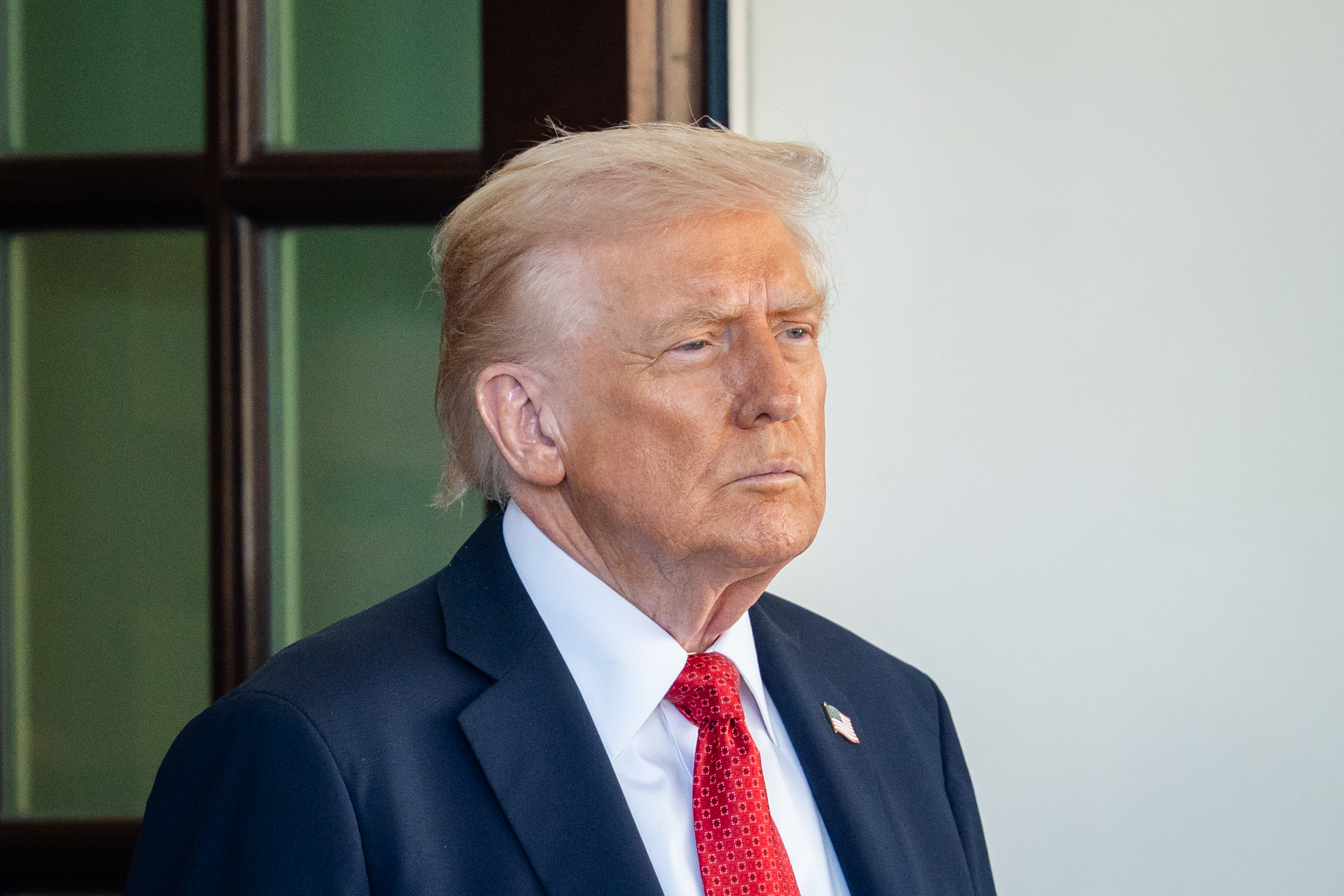

President Donald Trump said on Oct. 23 that he will not send federal agents to San Francisco this week.
The president had planned to send agents to the city in a crackdown on illegal immigration and violent crime but called off the plans after speaking to the city’s mayor about recent efforts by local law enforcement to bring down crime.
Trump said in a social media post that he was preparing to “surge” San Francisco on Oct. 25 but that friends of his from the Bay Area had asked him to pause the deployment order because San Francisco Mayor Daniel Lurie was making progress in reducing crime. Trump said he had then spoken to Lurie himself and that the mayor had “very nicely” requested an opportunity to turn things around.
Trump said he told Lurie that although he thought that the mayor was “making a mistake” and that federal agents could bring down crime faster and “remove the criminals that the Law does not permit [Lurie] to remove,” he decided to give Lurie a chance to see how he does.
“The people of San Francisco have come together on fighting Crime, especially since we began to take charge of that very nasty subject,” Trump said. “Great people like Jensen Huang, Marc Benioff, and others have called saying that the future of San Francisco is great. They want to give it a ’shot.' Therefore, we will not surge San Francisco on [Oct. 25].”
White House press secretary Karoline Leavitt said in a news conference shortly after Trump’s post that “the president is willing to work with anyone across the aisle, across the country to do the right thing and clean up America’s cities.”
Trump said hours later during a roundtable meeting with his Cabinet that several business leaders from the tech industry had told him that they were “working really, really hard with the mayor” to decrease crime in the Bay Area.
“I had four or five calls, and I think they’re making progress of their own,“ Trump said. ”That would be the greatest. I mean, if they could do that, that'd be great. So we are holding off that surge, everybody, and we’re going to let them see if they can do it.”
The president noted that if his agreement with local officials in San Francisco “doesn’t work out,” he will send federal agents to the Bay Area to “do it“ for them ”very quickly.”
Trump’s decision comes one day after the Department of Homeland Security said it would soon send agents to San Francisco to target and remove “the worst of the worst criminal illegal aliens.” However, the agency did not say when the deployment was slated to occur.
Trump had said in a Fox News interview that aired on Oct. 19 that San Francisco would be the next city to see federal immigration enforcement operations.
“We’re going to make it great,” he said. “It'll be great again. San Francisco is a great city. It won’t be great if it keeps going like this.”
Before Trump’s post announcing a decision to pull back the deployment of federal agents in San Francisco, Lurie and California Gov. Gavin Newsom had accused the Trump administration of attempting to provoke violent protests.
The Coast Guard stated on Oct. 22 that it was providing a base of operations for Customs and Border Protection agents in the San Francisco Bay Area for federal immigration enforcement operations.
“Through a whole of government approach, we are leveraging our unique authorities and capabilities to detect, deter, and interdict illegal aliens, narco-terrorists, and individuals intent on terrorism or other hostile activity before they reach our border,” the Coast Guard said in a statement.
Following reports of the deployment of federal troops to the Bay Area, Lurie livestreamed a statement from San Francisco City Hall, in which he warned against giving federal officials who might be working from “a playbook” any excuse for a crackdown.
During a separate news conference on Oct. 23, Oakland Mayor Barbara Lee said that despite Trump’s post about his call to Lurie and intentions to remove the Bay Area from his list of areas for federal agent deployment, local officials still “have no idea” what the Trump administration is or is not planning.
“This is very fluid, and so there’s no information we can bring to you today, to bring you up to date on what plans they have in place,“ she said. ”But we are moving forward with our plans and we are prepared.
“The federal administration, of course, has escalated its rhetoric and its enforcement posture in the Bay Area. We know that Border Patrol agents are being stationed on Coast Guard Island, but let me be clear, our city, as I said, we are fully prepared. We’re monitoring developments closely and will keep our residents informed if there are any confirmed changes.”
Newsom on Oct. 22 threatened to sue the Trump administration if it deploys National Guard troops to San Francisco.
“Send troops to San Francisco and we will sue you,” Newsom wrote on social media, referring to Trump.
California Attorney General Rob Bonta has backed Newsom’s repeated threats to take action.
“There is no basis to send National Guard troops to San Francisco,” Bonta said in a statement on Oct. 21. “No emergency. No rebellion. No invasion. Not even unrest.”
Lurie had said on Oct. 20 that sending the National Guard to San Francisco would not help the city in decreasing crime, which he said the city has been making progress with recently.
“I am deeply grateful to the members of our military for their service to our country, but the National Guard does not have the authority to arrest drug dealers—and sending them to San Francisco will do nothing to get fentanyl off the streets or make our city safer,” Lurie said in a statement.
Crime in San Francisco is at its lowest point in 23 years, then-San Francisco Police Department Chief Bill Scott told reporters in January.
“Across the board, with violent crime from robberies to shootings to homicides to sexual assaults, they’re all down,” he said, noting that violent crime and property crime were down by double-digit percentage points from 2023.
The San Francisco Bay Area had the highest property crime rate out of any region in California in 2023, at 3,167 incidents per 100,000 residents, according to a January review of crime statistics by the Public Policy Institute of California.
While overall violent crime in major California cities is down by 12.5 percent this year from 2024, the largest drops in overall violent crime were reported by the Oakland and San Francisco police departments, according to the Major Cities Chiefs Association.
The rate dropped by 30 percent in Oakland and 22 percent in San Francisco, year over year.
On Oct. 15, Newsom, a Democrat, highlighted efforts between key law enforcement partnerships in bringing down crime in San Francisco.
“Through meaningful and significant funding investments and partnerships with local law enforcement and community groups—our crime is down,” Newsom said in a statement. “Although good enough never is, we will keep working together to help keep Californians safe.”
Lear Zhou and Jacki Thrapp contributed to this report.