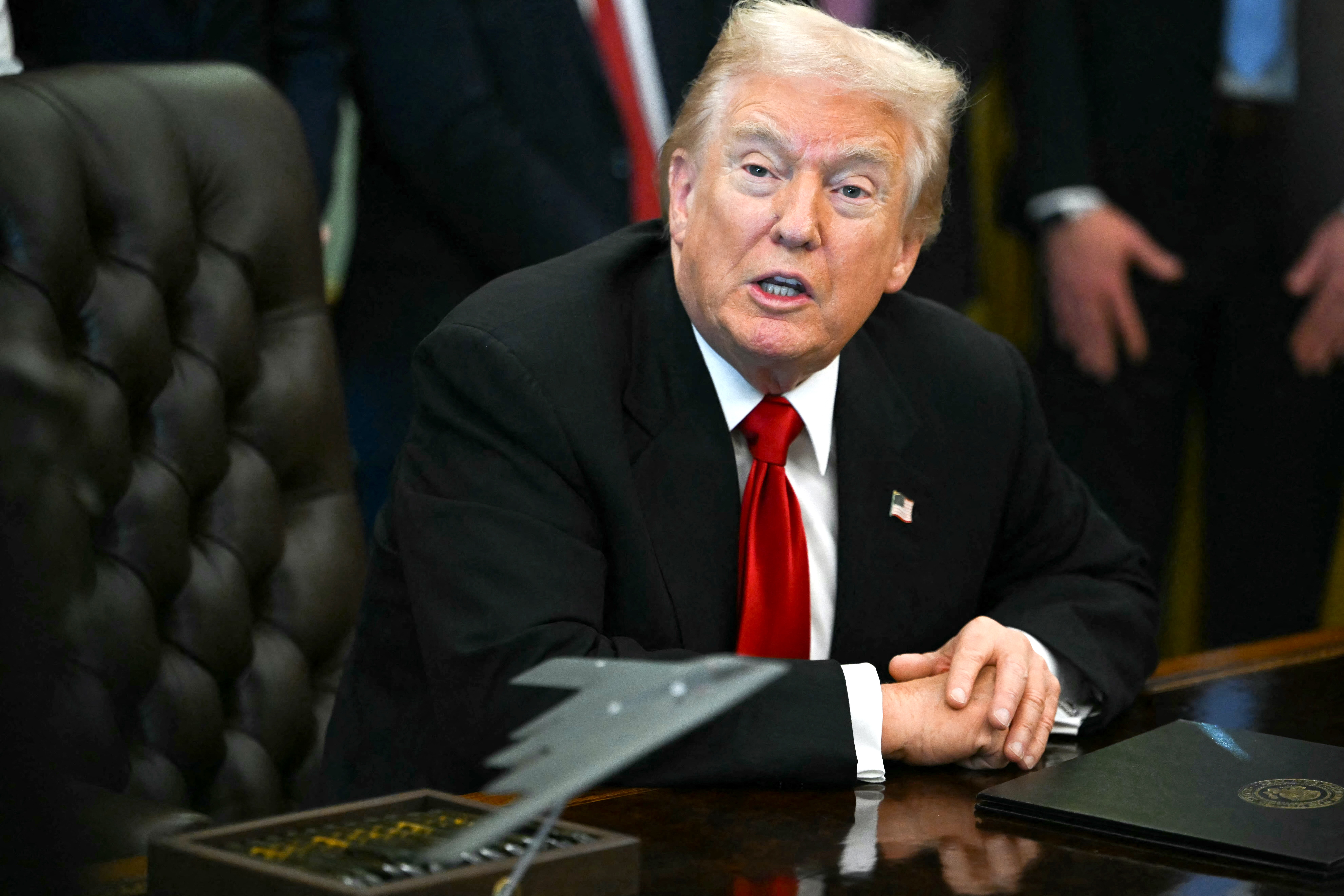

President Donald Trump defended the H-1B skilled worker visa program in an interview this week, saying that there are not enough qualified American workers to fill available jobs and that it will take time to develop enough homegrown talent to meet demand.
Trump’s remarks, made during a Nov. 11 interview with Fox News host Laura Ingraham, underscored his administration’s effort to balance stricter immigration enforcement with the need to ensure that U.S. businesses have access to the labor they need, particularly in high-skill industries facing shortages of qualified candidates.
In the interview, Ingraham asked Trump about the H-1B visa program, saying that bringing in thousands of foreign workers would hurt efforts to raise wages for Americans.
“Well, I agree, but you also do have to bring in talent when a country—” he began.
Ingraham interjected, “Well, we have plenty of talented people here.”
“No, you don’t,” the president replied. “No, you don’t have certain talents.”
He said that it takes time to build up the necessary skills to perform specialized work.
“You can’t take people off an unemployment line and say, ‘I’m going to put you into a factory where we’re going to make missiles,’” he said.
Trump cited a recent immigration enforcement operation at a South Korean-owned battery plant in Georgia to illustrate his point that some industries require highly specialized expertise.
“In Georgia, they raided because they wanted illegal immigrants out,” Trump said. “They had people from South Korea that make batteries all their lives. You know, making batteries [is] very complicated. It’s not an easy thing, and very dangerous. A lot of explosions, a lot of problems.”
Trump said that some of the South Koreans were training U.S. staff in the early stages of battery production to help get the plant running.
“You can’t just say a country is coming in, going to invest $10 billion to build a plant, and going to take people off an unemployment line who haven’t worked in five years, and they’re going to start making missiles. It doesn’t work that way,” he said.
Atlanta immigration attorney Charles Kuck, who represents four of the detained South Korean nationals, told The Associated Press in September that no company in the United States makes the machines used in the Georgia battery plant, so workers had to come from abroad to install or repair equipment on-site. He said it would take about three to five years to train someone in the United States to do that work.
“This is not something new. We’ve been doing this forever, and we do it when we ship things abroad; we send our folks there to take care of it,” Kuck said.
Trump’s remarks align with the business community’s ongoing complaints about a lack of workers to fill certain skilled roles. The latest small-business sentiment survey, released on Nov. 11 by the National Federation of Independent Business (NFIB), says finding talent is a top problem.
“Many firms are still navigating a labor shortage and want to hire but are having difficulty doing so, with labor quality being the top issue for Main Street,” NFIB chief economist Bill Dunkelberg said in a statement.
Thirty-two percent of small-business owners reported job openings they could not fill in October, unchanged for the second straight month, according to the latest data.
About 27 percent of owners identified labor quality as their single most important problem, up 9 points from September and the highest reading since the record 29 percent logged in November 2021. Labor quality ranked as the top concern, outpacing taxes, which came in second at 11 points lower.
Balancing Enforcement With Industry Needs
The Trump administration has paired its calls for tighter immigration controls with selective measures to help industries dependent on foreign labor. In an August interview on CNBC’s “Squawk Box,” Trump said that deported farmworkers who were in the country illegally would be allowed to return legally under new procedures designed to protect farmers during labor shortages.
His administration has taken steps to crack down on H-1B visa program abuse. In September, the Department of Labor launched Project Firewall, an H-1B enforcement initiative meant to ensure that employers prioritize highly skilled American workers in hiring decisions.
“By rooting out fraud and abuse, the Department of Labor and our federal partners will ensure that highly skilled jobs go to Americans first,” Labor Secretary Lori Chavez-DeRemer said in a statement announcing the launch of the initiative.
The H-1B visa program allows U.S. employers to hire foreign professionals in specialized fields such as technology, engineering, and medicine. The program caps annual visas at 65,000, with an additional 20,000 set aside for foreign nationals who earned advanced degrees at U.S. universities, according to the Department of Labor.
Critics have said that the H-1B and other work visa programs are often used to replace U.S. workers with cheaper foreign labor and don’t always attract the most highly skilled candidates.
Supporters, including major corporations and business advocacy groups such as the U.S. Chamber of Commerce, have said the visas are essential for filling roles that lack qualified American workers.
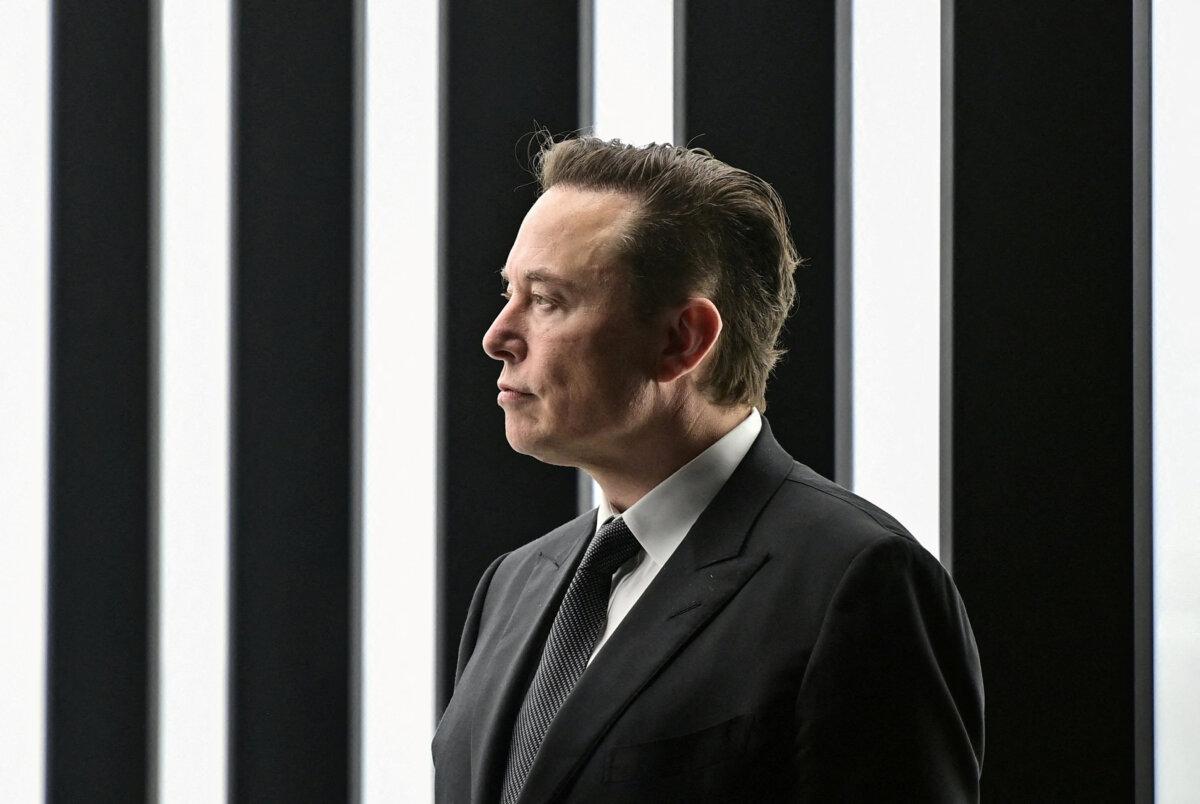
Elon Musk attends the opening ceremony of the new Tesla Gigafactory for electric cars in Gruenheide, Germany, on March 22, 2022. (Patrick Pleul/Reuters)
Tech entrepreneur Elon Musk, who came to the United States on an H-1B visa, has been one of the program’s staunchest advocates, calling it vital to the United States’ innovation economy.
“The reason I’m in America along with so many critical people who built SpaceX, Tesla and hundreds of other companies that made America strong is because of H1B,” Musk said in a Dec. 27 post on X, in response to a comment suggesting that the H-1B program should be “optimized” out of existence.