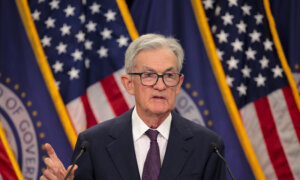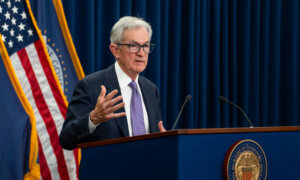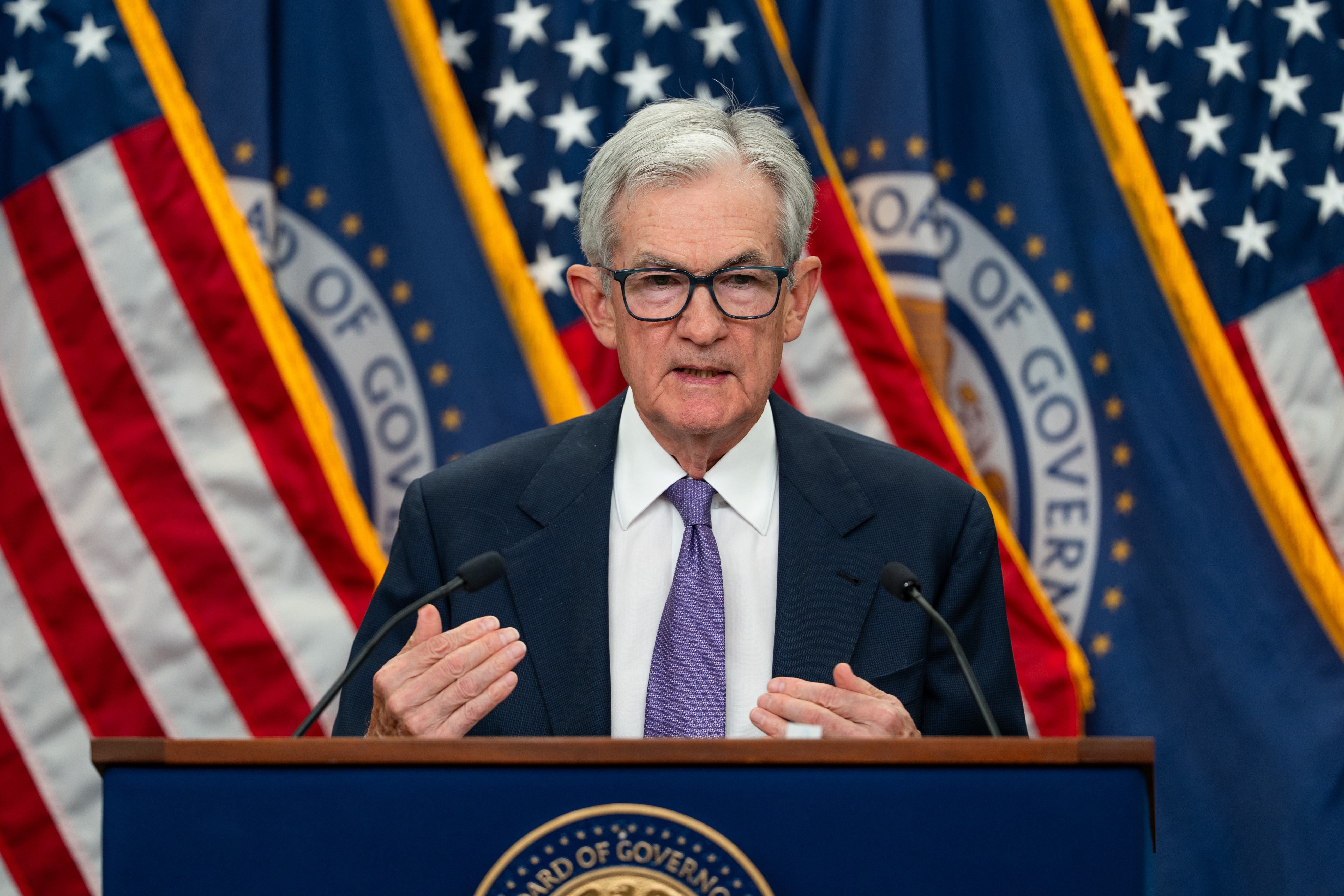

The Federal Reserve cut interest rates for the second straight meeting on Oct. 29 as policymakers take a cautious approach to easing monetary policy.
Officials voted to lower the benchmark federal funds rate, a key rate that influences borrowing costs for consumers and businesses, by a quarter point to a new target range of 3.75 percent to 4 percent.
“Available indicators suggest that economic activity has been expanding at a moderate pace,” the Federal Open Market Committee (FOMC) said in a post-meeting statement.
“Job gains have slowed this year, and the unemployment rate has edged up but remained low through August; more recent indicators are consistent with these developments. Inflation has moved up since earlier in the year and remains somewhat elevated.”
The Fed also announced that it will conclude its balance sheet drawdown on Dec. 1 and begin reinvesting mortgage-backed securities principal payments into treasury bills, or T-bills: short-term securities with maturities of one month to one year.
The committee voted 10–2 for a quarter-point cut. Member of the Fed Board of Governors Stephen Miran preferred a half-point reduction, while Federal Reserve Bank of Kansas City President Jeffrey Schmid did not want to change the policy rate.
Before the meeting, investors had penciled in a 98 percent chance of a 25-basis-point reduction, according to the CME FedWatch Tool.
U.S. stocks had rallied in the days leading up to the October FOMC meeting, with major indexes reaching record highs.
However, markets turned lower after Fed Chairman Jerome Powell signaled at his post-meeting press conference that another rate cut may not happen in December.
“There were strongly different views about how to proceed in December,“ Powell said. ”A further reduction in the policy rate at the December meeting is not a foregone conclusion. Far from it.”
The blue-chip Dow Jones Industrial Average reversed its gains during Powell’s press conference. At closing bell, it was down by 74.37 points because of uncertainty about the Fed’s December decision.
‘Much Lower, Much Sooner’
Despite the U.S. central bank being fully engaged in its easing cycle, President Donald Trump and his administration have been pushing for more aggressive rate cuts at an earlier stage.
Trump repeated his criticisms of Powell during his trip to Asia.
“He should have been much lower, much sooner,” the president told reporters aboard Air Force One on Oct. 27.
Later, in a speech to Asian business leaders in South Korea, Trump again called the central bank chief “Jerome ‘Too Late’ Powell.”
“We’re not going to have a Fed that’s going to raise interest rates because they’re worried about inflation ... three years from now,” Trump said on Oct. 29.
He also said his administration will appoint someone to the Fed that we “all like,” noting that the individual will support lower interest rates.
Treasury Secretary Scott Bessent confirmed to reporters earlier this week that those involved in the process to find Powell’s successor have narrowed it down to five candidates.
“We’re going to do a second round, and we hope to present a good slate to the president right after Thanksgiving,” Bessent told reporters. “It will ultimately be his choice.”
The final decision, he said, will be made before Christmas.
In the meantime, Miran has been advocating for an accelerated push to a neutral level, meaning a level at which interest rates neither stimulate nor restrict economic activity. He has wanted half-point rate cuts.
“I think it becomes even more urgent that we get to a more neutral place in policy quickly as opposed to sort of waiting for downside data to materialize,” Miran said at a CNBC event on Oct. 15.
Others have expressed support for a gradual unwinding of tight policies.
Member of the Fed Board of Governors Christopher Waller, considered a top candidate to replace Powell next year, thinks that interest rates should be about 100 to 125 basis points lower than they are today.
Waller has dismissed tariff-driven inflation, noting that the administration’s levies have had “modest effects on inflation.” Instead, he said, he will be examining “how the solid [gross domestic product] data reconcile with the softening labor market.”
“If [gross domestic product] growth holds up or accelerates and the labor market accordingly recovers, it might be an indication that policy is less restrictive than I thought and that the pace toward a neutral setting for the policy rate should be slower than I expected at the last FOMC meeting,” Waller said in prepared remarks at a Council on Foreign Relations event earlier in October.
“What I would want to avoid is rekindling inflationary pressure by moving too quickly and squandering the significant progress we have made taming inflation.”
In the September consumer price index report, there were signs that the president’s higher import duties were beginning to modestly affect tariff-sensitive items such as apparel and new vehicles.
However, the annual inflation rate rose to a cooler-than-expected 3 percent. Core inflation, which strips out the noisy food and energy categories, eased to 3 percent—lower than the consensus estimate.
Minutes from September’s rate-setting committee meeting revealed that policymakers viewed risks to inflation as diminished or unchanged but expressed concerns about a worsening labor market.
“The supply of workers has dropped very, very sharply due to mainly immigration, but also lower labor force participation,” Powell said at the news conference.
Absent key government economic data, officials have been relying on alternative, private sector data to determine the current state of employment conditions.
Recent numbers suggest that employment conditions could be rebounding. In the four weeks that ended on Oct. 11, private companies created an average of 14,250 new jobs per week, according to payroll processor ADP.
Additionally, the Federal Reserve Bank of Chicago’s Labor Market Indicators suggest that the unemployment rate has barely changed, sitting at 4.35 percent.
Because the central bank views data from sources such as the Bureau of Labor Statistics or the Bureau of Economic Analysis as the gold standard, it could be harder for the Fed to craft policies.
The Fed will convene its next two-day policy meeting on Dec. 9.