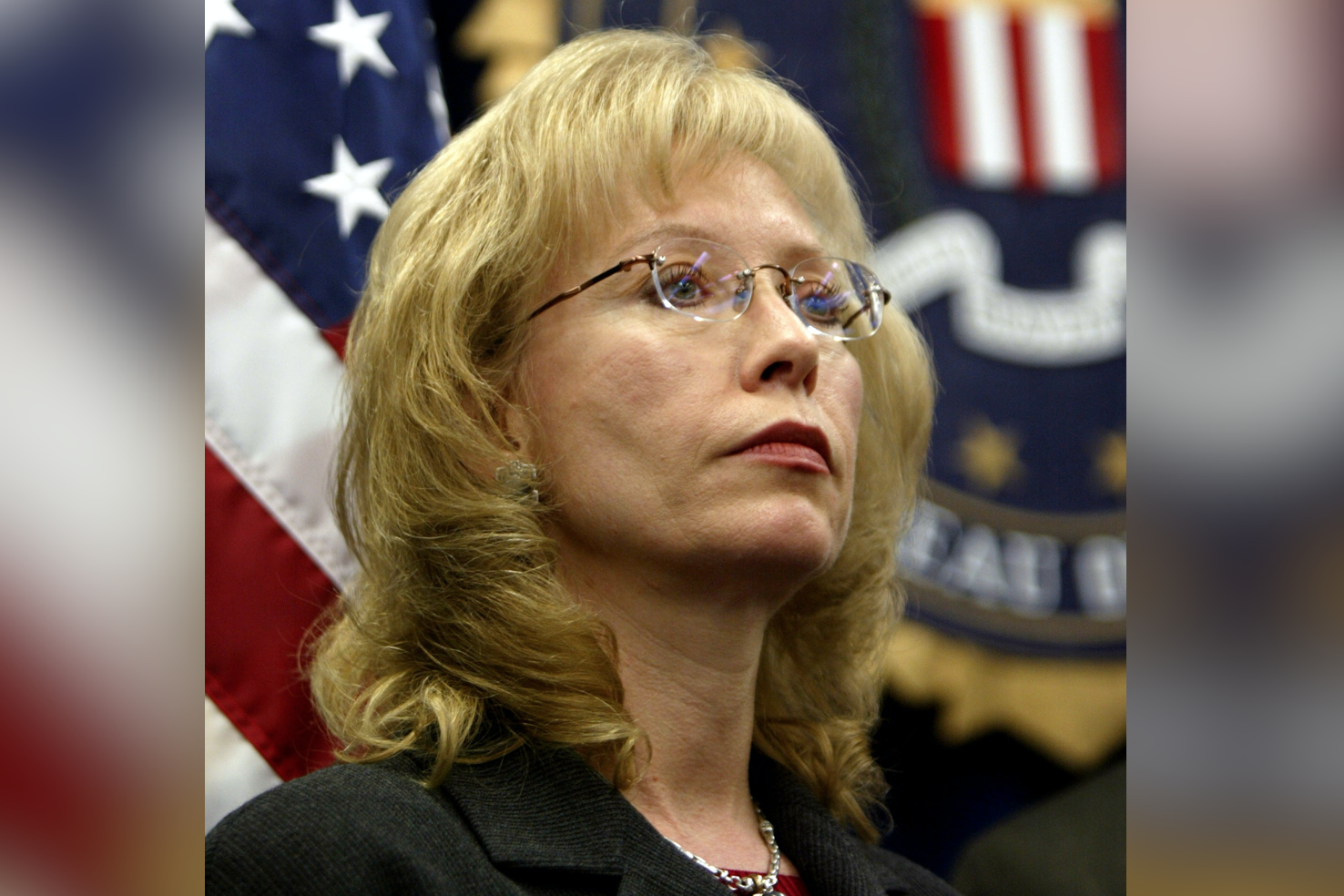
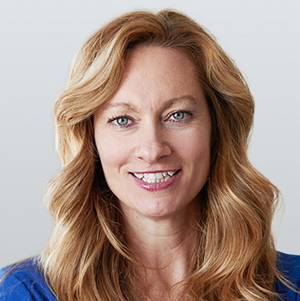
As one of the first female agents in the FBI’s Behavioral Science Unit and a key figure in developing the bureau’s profiling techniques for serial killers and establishing its first cyber security team after 9/11, Jana Monroe has been breaking new ground.
Long before she became an inspiration for Clarice Starling in “The Silence of the Lambs,” Monroe knew from the age of 13 exactly what she wanted to do. She recalled that she was never that kid who waffled between being a ballerina one week and a doctor the next.
“I loved our country and that it was a nation of laws and liberties, and I wanted to do something to preserve that. And no offense to attorneys, but I didn’t want to be an attorney. I also hated bullies. I can’t stand people who take advantage of others and their vulnerabilities,” the former FBI agent told The Epoch Times.
“My thoughts drifted to, ‘How can I marry up these two ideas? What would that be?’ The answer was law enforcement.”
Her choice was confirmed when, as a teenager, she did a ride-along with a neighbor’s son who was a police officer in Long Beach, in Los Angeles County, California. They were sent to arrest a drunk, naked woman in a bar, and when Monroe saw that the officers were struggling to respond to this sensitive situation, she thought, “Perhaps there is a place in law enforcement for a woman’s sensibilities.”
Monroe said she has never wavered from that goal. Majoring in criminology at California State University–Long Beach, she went on to work in juvenile probation with San Bernardino County and then with the Youth Training School in Chino, which housed the worst-of-the-worst young residents, accused of theft, rape, and homicide. She then moved into several positions in law enforcement in Southern California.
When Monroe decided to apply to the FBI, her husband at the time was not supportive of her choice and gave her an ultimatum, forcing her to choose between him and the bureau. She chose the bureau.
She was eventually accepted into the FBI and entered her class with seven other women in July 1985.
Women in the FBI
Just weeks after the death of FBI Director J. Edgar Hoover in May 1972, the new acting director announced that for the first time women would be allowed to apply to become FBI special agents.
“Even before all this, I had already set my sights on the FBI, but I knew it might be a wait,” Monroe said. “When I was at a career fair early in my college career, I approached an FBI representative asking about how to get into the FBI. He told me women could not be agents and that I could choose between a file clerk or a secretary.”
After serving at several smaller field offices, including Albuquerque, Tampa, and Washington, Monroe became the first woman working in the FBI’s Behavioral Science Unit in 1990. She eventually worked on about 850 cases, the vast majority of them homicides—including those involving serial killers Ted Bundy and Jeffrey Dahmer—during her five years there.
She was also asked to help Jodie Foster, who was playing the role of FBI agent Clarice Starling in the 1991 film “The Silence of the Lambs.” In the story, Starling works on the case of fictional serial killer Hannibal Lecter.
“Foster was very professional and prepared when she attacked the research for her role,” Monroe said.
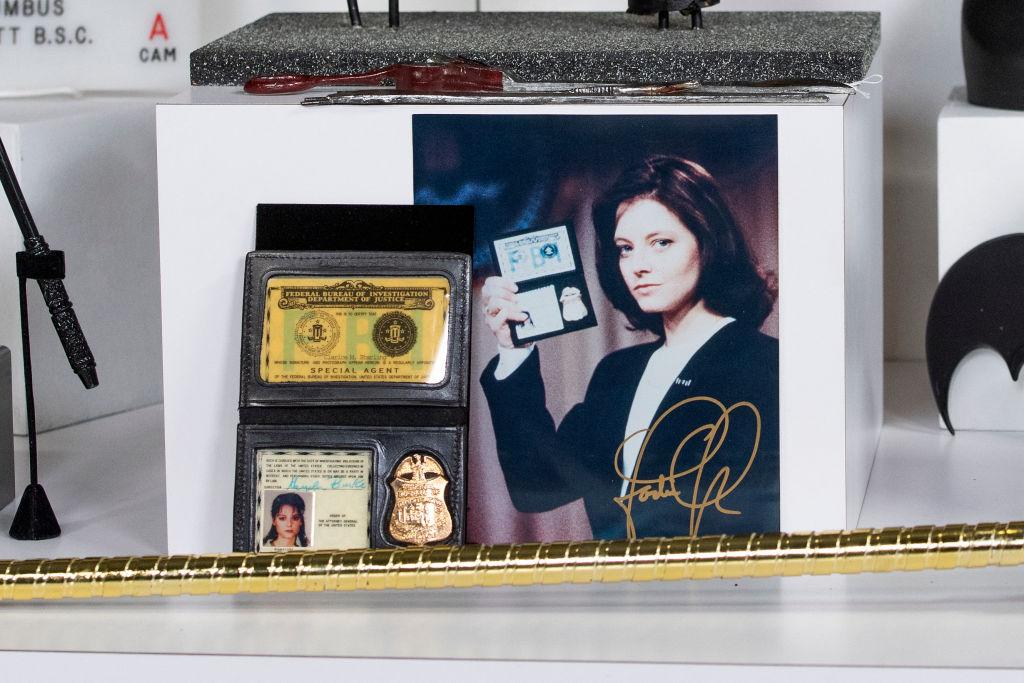
Jodie Foster's Clarice Starling prototype FBI badge and credentials from "The Silence of the Lambs" are seen at the preview of Julien's Auctions Hollywood Sci-Fi, Action Fantasy and More auction in Beverly Hills, Calif., on March 10, 2021. (Valerie Macon/AFP via Getty Images)
“She had a vision of what Clarice Starling was going to be like, and she would ask me questions about the dialogue in the script, if an agent would really say that. I would tell her yes or no depending on the situation.”
Foster then won an Oscar for Best Actress for the role in 1992. The American Film Institute later ranked her portrayal of Starling as the greatest heroine in film history.
Monroe went on to work on cases such as the Ruby Ridge standoff in Idaho in 1992; the 1993 Branch Davidian standoff in Waco, Texas; the Columbine school shooting in 1999; the escape of maximum-security prisoners called the Texas Seven in 2000; and the 9/11 terrorist attacks in 2001.
The unit also trained police officers from other countries, she said.
Monroe said she was grateful when she was later transferred back to the Los Angeles field office as special agent in charge,
“L.A. was home, and my family was there,” she said.
However, Monroe said, her branch experienced funding issues and was “sort of forgotten on the other side of the country” by the main office in Washington.
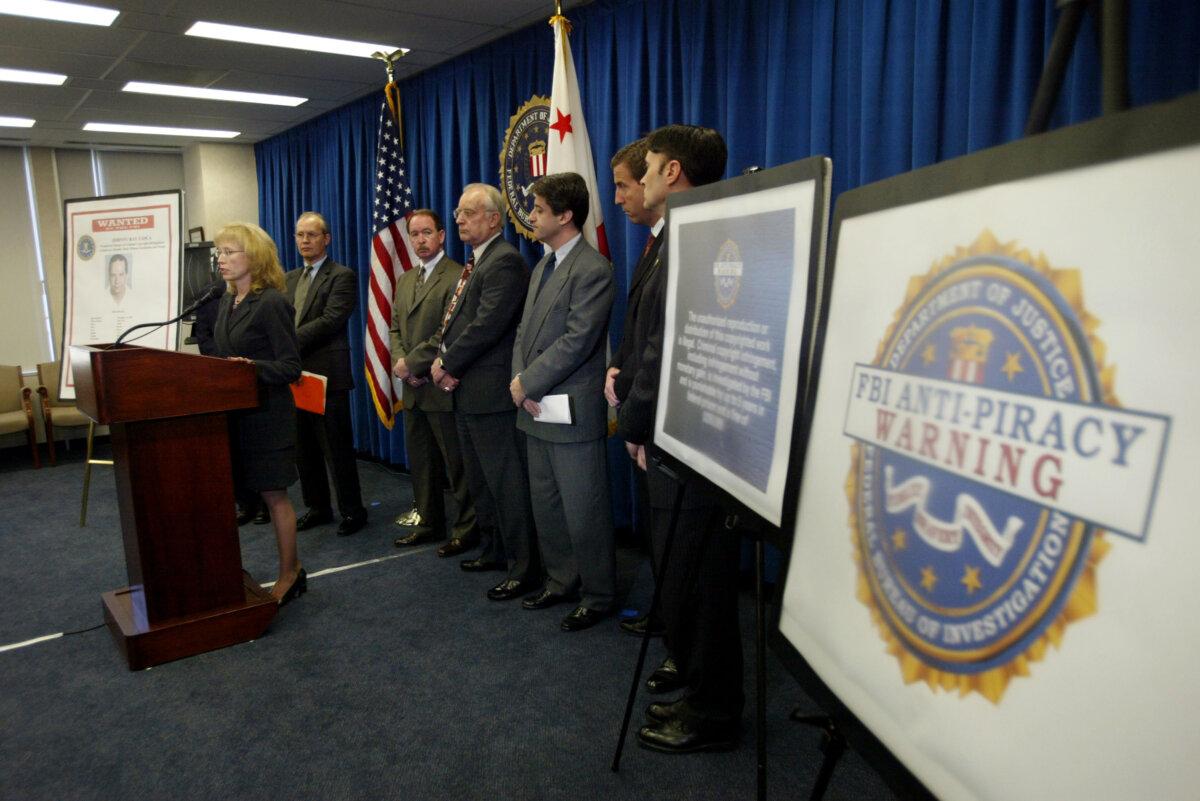
FBI Cyber Division Assistant Director Jana Monroe speaks near a large warning label at a news conference in Los Angeles on Feb. 16, 2004. (David McNew/Getty Images)
New Challenge
As she was working to grow the office, she got a call from the deputy director on a Friday that FBI Director Robert Mueller wanted to see her on Monday morning in Washington.
“It was like getting called into the principal’s office,” Monroe said. “I asked the deputy director if he could tell me what this was about, and he said, ‘No.’ Then, I called him later that night and said, ‘I think you owe me an explanation.’ He said, ‘It’s not a bad thing; it’s a good thing. Just get to the Washington office by 7:30 a.m. Monday morning.’”
She recalled that during the meeting, Mueller informed her that he was interviewing people to lead the FBI’s new Cyber Division. This was right after the attacks of 9/11, which greatly changed the bureau’s priorities. The top three tactics became terrorism, counterintelligence, and cybersecurity.
In the interview, Monroe joked that she didn’t even know if cyber was spelled with a “c” or an “s” prior to saying that she was not interested in the position.
She then left the interview to head back to Los Angeles. Before she arrived at the airport in Washington, Mueller called her cellphone.
“Congratulations, you’re the new assistant director of the Cyber Division. I’m not asking you. I’m telling you,” Monroe recalled Mueller saying.
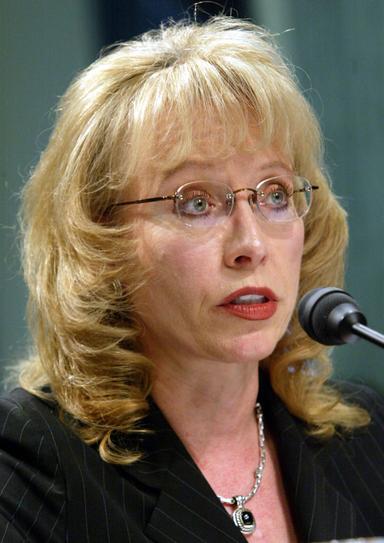
FBI Cyber Division Assistant Director Jana Monroe testifies during a hearing before the Senate Committee on Commerce, Science, and Transportation on Capitol Hill in Washington on May 20, 2004. (Alex Wong/Getty Images)
The FBI’s Cyber Division was officially established in 2002 and was designed to consolidate cyber-related investigations into one division to more effectively identify, mitigate, and disrupt such threats.
During her time there, Monroe began to experience burnout. She said there was an expectation of “Do it yesterday!”
She said she arrived at the office at 5 a.m., and at times, she found herself arriving home and falling asleep in her suit, telling her husband to fend for himself for dinner.
“In retrospect, I realized that was not good leadership and management on my part. But at the time, I didn’t have a team that I could delegate to because we were all new and developing the Cyber Division,” she said.
Not long afterward, Monroe’s mother was diagnosed with terminal cancer, and she requested to return closer to her family in California. Mueller then gave her the position of special agent in charge of the Phoenix field office. She retired from the bureau in 2006.
Power of Faith
Reflecting on her distinguished 22-year career at the FBI, Monroe said her faith had given her the resilience and strength to face the darkness in her job.
“God had always been with me, but I didn’t recognize it. My dad was an atheist, and my mom was going to school to be a Presbyterian minister. No wonder I was confused as a child,” she said.
Monroe said her time in the Behavioral Science Unit, where she had to examine grisly, evil things and experience the spectrum of humanity—from diabolical serial killers to people such as Mother Theresa—became a spiritual turning point for her.
“I started questioning and looking at instances in my life and knowing that God was with me. I got baptized after the [Behavioral Science Unit]. Then, my learning about the Bible became insatiable. I wanted to go to seminary, not to be a pastor, but to learn. I became very focused on the Bible and religion,” Monroe said.
This change affected her personal life, which in turn transformed her professional life. She said she became much less anxious and more calm and reassured.
“I also became less judgmental and more accepting of a lot of things once I was on my faith journey. My husband, Dale, has always been a strong believer, and when I took this step, it strengthened our marriage tenfold,” she said.
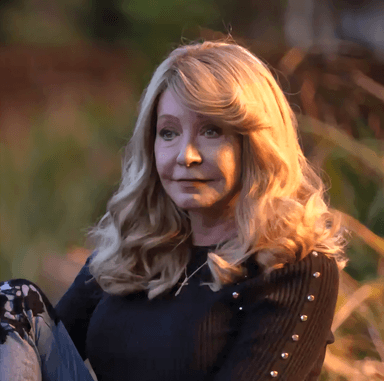
Former FBI agent Jana Monroe. (Courtesy of Jana Monroe)
Being immersed in such darkness for so long, Monroe said, many might think that it would taint or warp a person’s outlook. But she said she emerged from her voyage through good and evil as a more complete person who recognizes more the goodness of people around her every day. She said her experience also motivated her to read the Bible and seek out stories of heroes who gave their lives selflessly for others.
In coping with tragedies in her law enforcement journey, there was also one revelation that she had while writing her 2023 memoir, “Hearts of Darkness,” that came from a friend of hers who is a psychologist. Monroe loves art and collecting art, and while writing her book, she said, she would take time out to go visit the art around her house.
She recalled that her friend noticed and pointed out to her, “You have Norman Rockwell-type art. It’s so opposite of the work you did. It’s all innocent, little kids and puppies. And fall scenes.”
Monroe said she hadn’t recognized that, but she agreed with the observation. Having that kind of art around her was her way of offsetting the evil. “I visit the paintings to calm me down,” she said.
In her book, Monroe talked about her understanding of the nature of evil, how it “isn’t the opposite of good. It’s the absence of it—like a black hole where empathy should be.”
She said that during her time in the FBI, people always asked her how she was able to keep going into the prisons to talk to murderers and serial killers.
“My answer was always the same: If I can sit with the worst humanity has to offer and come out the other side, then maybe—just maybe—I can help stop the next one,” she wrote.