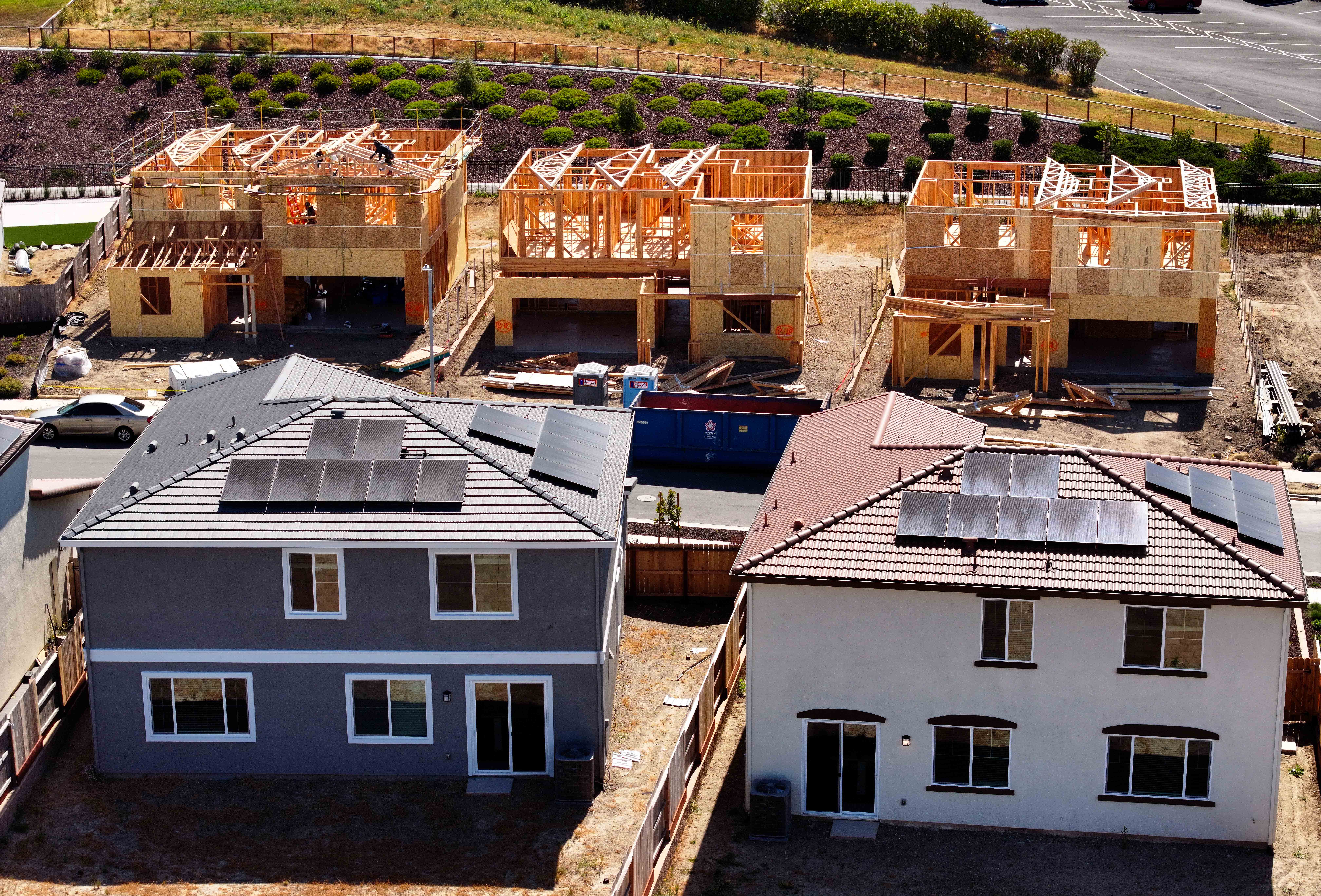

A Sept. 16 report from the National Association of Home Builders (NAHB)/Wells Fargo Housing Market Index (HMI) showed the month’s future sales expectations increased by two points, to 45, the highest reading since March.
Current sales conditions as of this month were measured at a rate of 34, while the prospective buyer traffic was rated at 21.
Although builder confidence remained stagnant in September, at 32, lower mortgage rates and anticipated Federal Reserve interest-rate cuts are prompting greater expectations of additional sales during the fourth quarter.
“While builders continue to contend with rising construction costs, a recent drop in mortgage interest rates over the past month should help spur housing demand,” NAHB Chairman Buddy Hughes, a homebuilder and developer from Lexington, North Carolina, noted in the report.
NAHB chief economist Robert Dietz added that the association expects the Fed to further cut rates, which will also help to lower interest rates for builder and developer loans.
“Moreover, the 30-year fixed-rate mortgage average is down 23 basis points over the past four weeks, to 6.35 percent, per Freddie Mac,” he said. “This is the lowest level since mid-October of last year and a positive sign for future housing demand.”
The HMI also indicated that 39 percent of builders admitted to cutting prices this month—a 2 percent jump from 37 percent in August, and the highest percentage in the post-pandemic period.
The average price reduction reported was 5 percent in September, which is the same amount every month since November 2024. In addition, the introduction of sales incentives reported was 65 percent, down slightly from 66 percent in August.
A review of moving averages during the past three months shows the Northeast held the highest HMI score at 44, the Midwest at 42, the South at 29, and the West at 26.
For more than 30 years, the NAHB has conducted a monthly survey of more than 3,000 single-family builder members to generate this report. The HMI survey asks builders to rate market conditions for the sale of new homes at the present time and expected over the next six months, as well as the traffic of prospective buyers.
In addition, the survey asked builders to rate the most significant challenges they faced in 2024 and 2025.
One of the biggest changes in just one year was the response about gridlock or uncertainty in Washington, with 60 percent believing that was a huge challenge in 2024, as opposed to just 32 percent this year.
In 2024, 91 percent of respondents named interest rates as their biggest concern, compared with just 78 percent this year. Inflation also scored high at 81 percent last year, as opposed to only 52 percent this year.
The cost and availability of lots and labor remained basically the same for both years, hovering from 61 to 65 percent.
Historically, the report indicated, interest rates have played a significant role in the overall housing marketing conditions. Employment rates are another factor that can impact the HMI, as high unemployment rates can often decrease the demand for housing.
Material costs are also typically cited as a major factor in the home building industry, as are inflationary pressures impacting the price of both products and services.