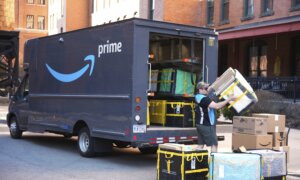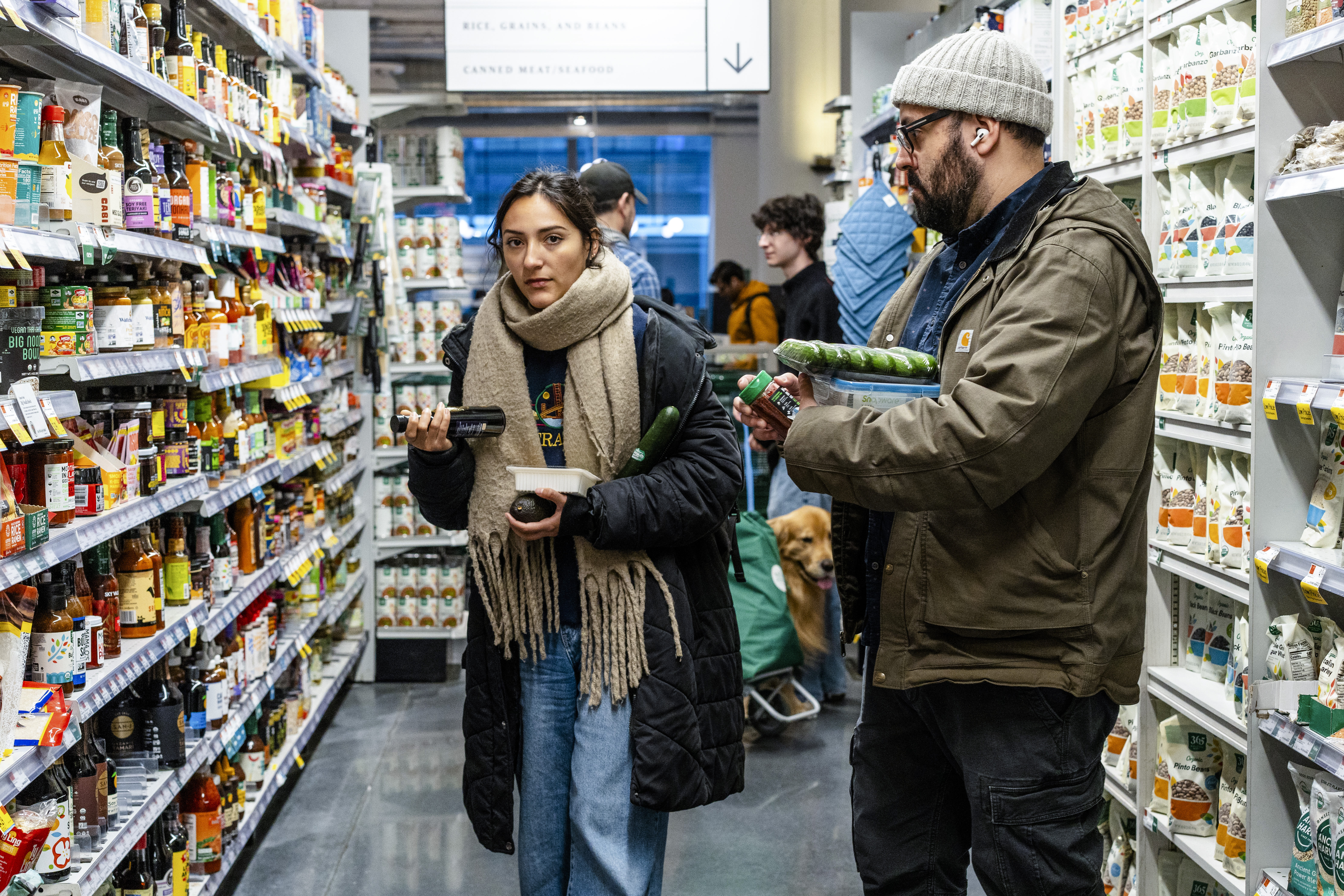

Amazon is making another concerted effort to capture a larger slice of the $1 trillion U.S. grocery industry.
The Seattle-based online retail and technology giant announced on Aug. 13 that it will expand its same-day delivery service to include perishable groceries in 1,000 markets. Amazon plans to extend its coverage to more than 2,300 markets by the end of 2025.
“This shift marks a major step toward a seamless, all-category Amazon shopping experience—and underscores Amazon’s ambition to lead the future of the U.S. grocery market,” Jack O’Leary, director of eCommerce Insights at NielsenIQ (NIQ), said in an Aug. 15 analysis.
The expansion of same-day delivery was an “important step forward in Amazon’s broader strategy“ and should help it capture a portion of the perishable business where it has ”struggled historically,” a team of analysts at Wedbush Securities said in an Aug. 13 research note.
Amazon has been trying with little success to disrupt the grocery business for nearly 20 years, Jason Goldberg, chief commerce strategy officer at Publicis Groupe, told The Epoch Times.
In 2007, Amazon launched its grocery store concept and delivery service, Amazon Fresh. In 2017, it spent $13.7 billion to purchase specialty grocer Whole Foods Market and its 500 locations across the country.
Amazon has launched other grocery chains and concepts over the years, but most of those are now shuttered, according to Goldberg, a longtime observer and commentator on retail brands and strategy.
“The one category they’ve invested a lot of time and money in that they have not done particularly well is grocery,” he said.
“As they’ve improved their supply chain and gotten more efficient, they’ve been able to sell a lot more of those lower-cost everyday essentials, but they actually haven’t been very successful at selling fresh and frozen products.”
Food purchases made up 18 percent of Amazon’s total online sales over the past 52-week period, according to the analysis by NIQ.
That trails major competing retailers, in which food purchases made up about 58 percent of sales generated in the same period.
“Closing this gap will be one of the most lucrative growth opportunities in the future of U.S. retail, and Amazon is positioning itself to be a key player,” NIQ analysis authors Jack O’Leary and Dan Bonert said.
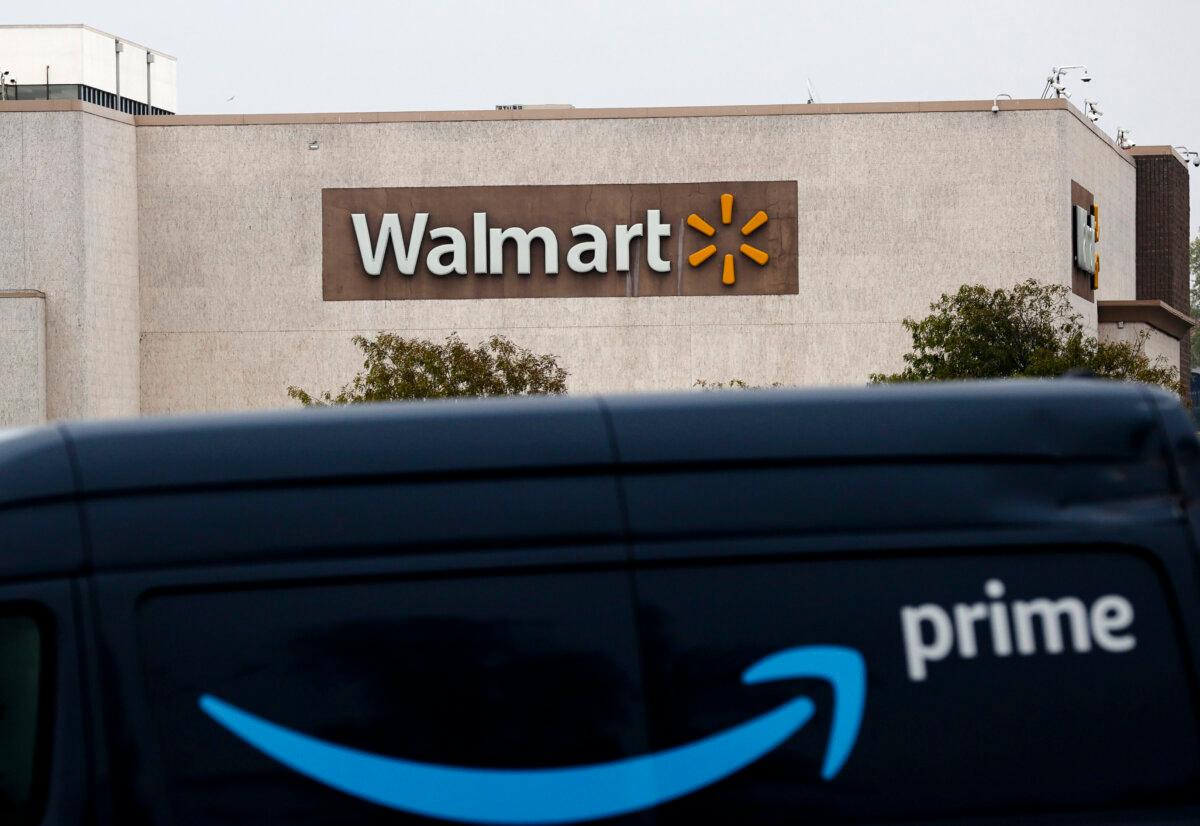
An Amazon Prime delivery van near a Walmart store in Richmond, Calif., on Sept. 3, 2020. (Justin Sullivan/Getty Images)
A $1 Trillion Prize
The grocery business is the largest single retail category in the United States, and it is still “relatively untouched by the internet,” according to the Wedbush note.
In 2024, grocery sector sales made more than $1 trillion, according to FMI, The Food Industry Association.
While consumer behavior is shifting, the overwhelming majority of grocery purchases still take place at a store. In 2024, only 7.1 percent of total grocery sales were made online, according to FMI.
The grocery business is challenging for a technology and logistics firm such as Amazon because of its complexity and relatively low profit margins.
Every grocery store is expected to maintain a constant mix of fresh, frozen, perishable, and nonperishable items, Goldberg said. On average, according to FMI data, there are more than 31,700 items carried in a typical U.S. supermarket.
Food retailers earned, on average, 1.7 percent in net profit after taxes in 2024, according to FMI. By comparison, as a whole, Amazon Inc. earned about 9.3 percent profit in 2024, according to its annual filing with the Securities and Exchange Commission.
Amazon desperately wants to win in grocery because the category captures 22 percent of overall consumer spending, it is the most consistent purchase that consumers make, and it represents a treasure trove of data, according to Goldberg.
“If you want to be the first one she thinks of when she’s looking for new things, you want to be her grocery provider,” he said.
“If you want data about how she lives her life and manages her family, [then] you want the data about the groceries she’s consuming.”
It’s likely that Amazon has studied how Walmart, which began selling groceries in 1988, became the largest single grocer in the United States, Goldberg said.
In its fiscal year 2025, the Arkansas-based low-cost retailer sold about $335.9 billion worth of groceries through its Walmart and Sam’s Club stores in the United States. In second place, grocery store chain Kroger sold $147 billion worth of groceries in a similar 12-month period.
In recent years, online sales have played a large role in Walmart’s success, Goldberg said.
The company was the first to launch an online “order and pick up at the store” service, with groceries placed directly in the shopper’s car. Walmart is now even offering a limited service through which an agent will both deliver groceries and put them in the pantry and refrigerator.
“[Walmart is] years ahead of Amazon in digital grocery,” he said.
NIQ observed that Amazon is seeking to catch up with more established players in delivering perishable goods.
In the past, Amazon lagged behind brick-and-mortar retailers with refrigerators and freezers across the United States. Now, it has “closed its infrastructure gap in online grocery” and can back up its same-day delivery promise, O'Leary and Bonert said.
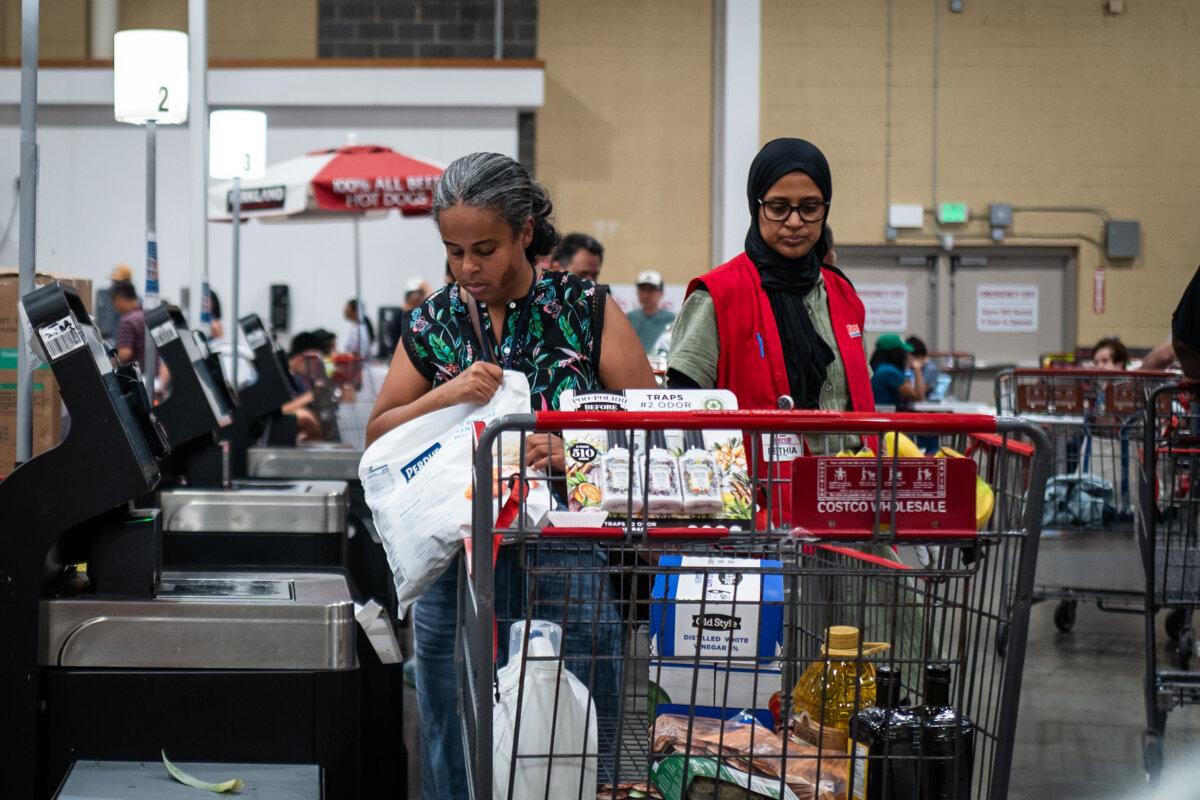
People shop at a store in Elkridge, Md., on July 11, 2025. (Madalina Kilroy/The Epoch Times)
Can Amazon Win?
Analysts’ opinions vary as to whether the same-day grocery delivery expansion will translate into a substantial victory for Amazon or will wind up as another false start.
In the short term, Amazon’s grocery delivery expansion is a real threat to companies that serve only as a grocery delivery service, such as InstaCart, DoorDash, and Uber, the Wedbush note said.
Investors, in what the Wedbush analysts called a reasonable response, sent the value of all three companies downward in the wake of the Amazon announcement.
“Along comes Amazon with an existing nationwide network of fulfillment centers and delivery trucks that seems to have finally figured out how to store and fulfill perishables in a way to support same-day efforts,” Wedbush analysts stated.
At this time, the more established grocers are not as directly threatened by Amazon, according to the Wedbush note.
Amazon’s same-day delivery service will likely set the new standard for grocery shopping, O'Leary said in his Aug. 15 analysis, adding that Americans will expect that they can “shop for apples and AirPods in the same transaction, with the same delivery promise.”
Amazon will be boosted by its unparalleled access to a wide range of goods, its mature artificial intelligence agents, which can make product recommendations and remember each consumer’s preferences, and its strong fulfillment infrastructure, O'Leary stated in his analysis.
“The future of grocery is not just fast, it’s smart, scalable, and deeply connected,” O'Leary said.
John Clear, a partner at AlixPartners and former executive at German grocer Lidl, was more skeptical of Amazon’s ability to convert convenience into dominance.
In a LinkedIn post, Clear said he thinks that Amazon will have a hard time replicating the quality, experience, and value that consumers get from shopping at their preferred grocery store in person or online.
“It will be fascinating to watch how customers react, but my money is on short-term pain for the incumbents, but remaining long-term barriers to Amazon’s growth ambitions until they truly land on what makes their core grocery proposition stand out,” he said.
While Amazon is clearly ambitious and capable of making fast deliveries, the company is still facing a disorganized delivery structure and a potentially confusing shopping experience, Goldberg said.
Like Clear, he said he believes that some consumers will continue to purchase goods in person because of the experience, brand loyalty, or the intangible relationship that they have with a particular grocer.
But he was wary of betting against Amazon in the long term.
“I don’t think the smart people at Kroger or Walmart or Instacart are in any way overlooking Amazon,” Goldberg said.
“I think that they’re ... very worried about what Amazon does.”